


On October 19, the big day finally arrived: the Youth Council held its first, eagerly anticipated meeting with members of the state parliament. Unfortunately, Turgut Altuğ had to cancel at the last minute due to illness, but Ellen Haußdörfer from the SPD was there and listened to our questions—some of which were quite critical—and answered them as best she could. This first meeting focused entirely on the topic of “nutrition education,” because who else is more in touch with our everyday school life in Berlin than a group of (former) students? Moreover, a dietary shift begins with the education of our youngest—how else is our society supposed to learn what a “healthy” and “sustainable” diet even is? How are we supposed to eat properly and healthily if no one teaches us what that actually means?
We built many more questions around this fundamental one: Why do we learn (almost) nothing about healthy and sustainable eating in school? Why do our schools often lack functional school kitchens where we could cook together? Why are school meals so unhealthy and so rarely appreciated?

During the Youth Council meetings leading up to the discussion with the representatives, we learned a lot about nutrition. We found the discussion at the second meeting particularly important, during which Stephanie Nicolaus (Restlos Glücklich) explained the connections between nutrition and climate change. A topic as complex as nutrition is always interconnected with other issues; in fact, our diet has a direct impact on our climate. From the destruction of large areas of forest—for example, in the Amazon—to grow food for the animals we consume so much of in Germany, to the environmentally harmful transport of pineapples by plane to Germany. The two issues are closely intertwined. The same is true for social justice in the context of nutrition. People with lower incomes simply cannot afford a healthy diet and are forced to resort to less healthy products. This led us to ask: Why is the environmentally harmful and unhealthy cheap pizza—whose ingredients are flown in from all over the world—cheaper than the healthy zucchini from Brandenburg?

These were also questions we brought up in our conversation with Ms. Haußdörfer: Why is there hardly any discussion about the enormous impact of our diet and agriculture on climate change? Why can’t people with lower incomes afford a sufficiently healthy diet? Why is little to nothing being done to stop this exploitation of people and the environment?
So we all went into the meeting very well prepared and motivated—we really wanted to get some answers. During our conversation with Ms. Haußdörfer, we realized that there weren’t as clear-cut answers to many of our questions as we had hoped. Much is already changing, while other issues are barely being addressed. According to Ms. Haußdörfer, many issues cannot be easily mandated by policymakers as they perhaps should be, while on other topics, various political parties are blocking a solution.

So, above all, we’ve learned that we still have a long way to go and several discussions ahead of us before we can truly make a difference. That’s why we’re eager to see how the next discussions with politicians—including those from other parties—will go, and how we can further develop and spread our demands.
P.S.: We still have room for more members—if you want to make a change in your diet, are under 21, and are interested in politics, feel free to sign up here.
This project is funded by the Senate Department for the Environment, Mobility, Consumer Protection, and Climate Protection.


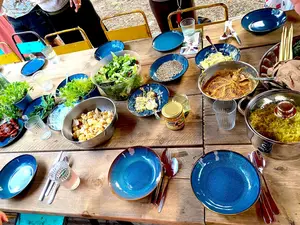


Since 2022, the Weltacker Youth Council has been working with us—an exciting project that brings young people in Berlin together. They all share one goal: a voice in Berlin’s food policy!