


Immediately after harvest, the potato is sorted out because it isn’t egg-shaped. In winter, tomatoes go moldy in storage before they even reach the stores. And at home, unopened yogurt ends up in the trash because the best-by date was yesterday.
Food waste begins in the fields—yet in Europe, large quantities are lost in private households. At a time of rising food prices in Germany and growing global crises, this is a contradiction we can hardly afford.
Food is valuable—so why don’t we treat it that way? And what can be avoided?

According to the UNEP, approximately 1.05 billion metric tons of food are thrown away worldwide every year. This occurs throughout the entire value chain—that is, during storage, in retail, and finally in our kitchens.
These 1.05 billion metric tons also represent a waste of labor, resources, farmland, and energy.
At the production level, sorting takes place: surplus quantities are thrown away, and unattractive fruits and vegetables don’t sell well and are therefore discarded beforehand. Losses also occur during transport, storage, and in supermarkets.
Agriculture is affected and is part of the problem. We, as consumers, can and must also be part of the solution!
But where do we start?
Due to overbuying, improper storage, or misunderstandings about best-by dates, we treat food as disposable goods.
In Europe, we’re used to the constant availability of all kinds of products. Supermarkets stock a wide range of products, which can lead to surpluses when demand drops.
The situation is different in countries of the Global South. Some small-scale farmers are forced to harvest prematurely, either because food is scarce or due to a lack of funds, so they have to sell the harvest. As a result, the produce is often less nutritious and of lower economic value—and may go unused if it cannot be consumed.
Furthermore, crops cannot be preserved; in warmer countries, harvested produce spoils because there is a lack of refrigeration systems for storage.
At the consumer level, food waste in Latin America, as well as in South and Southeast Asia, is significantly lower than in North America or Europe. Due to lower incomes or poverty, food waste in private households is simply not sustainable.

At the same time, we in Germany are losing sight of the value of food: we take it for granted, and despite rising food prices, it’s still too cheap. But that has to change.
Just because the consequences aren’t immediately apparent doesn’t mean we can afford to waste food.
It’s both important and challenging to adjust our product quantities to meet our needs. If we don’t get it right, the infamous “best-by” date can sometimes be exceeded.
So what now?
First of all, the best-by date is not the expiration date, which some people still often confuse. Many products are still edible weeks after that date—if they look, smell, and taste good, they’re often still perfectly safe to eat.
For perishable products, the use-by date is crucial—for example, with animal-based products.
If you’re aware of these misunderstandings, you can make more informed choices—what specific steps can we take in our daily lives to avoid waste?
To make a difference, small habits can go a long way.
This could be your shopping list, which helps you think more consciously about your own consumption.
You can make a big difference just by how you store your food: The bottom shelf of the refrigerator is the coldest, so that’s where perishable foods belong. Leftovers are great for freezing and using later. You can also experiment a lot with this.
You can often get more out of your food than you think. Vegetable and fruit peels can be used in many ways, as can the leaves of many vegetables.
Choosing regional and seasonal products makes a big difference. This has many advantages.
It reduces CO₂ emissions, for example, through shorter transport distances or by eliminating the need for heating and cooling.
Seasonal calendars, for example, are a great resource for this.

Thus, every purchase is a decision and always a mandate for the agricultural sector.
That’s what we want to convey at Weltacker. Because every bite has its place. And every bite deserves this awareness and appreciation.
 FAO (2011). Global Food Losses and Food Waste—Extent, Causes, and Prevention. Rome. Available at: https://www.fao.org/sustainable-food-value-chains/library/details/en/c/266053/
https://de.statista.com/themen/8554/lebensmittelpreise/#topicOverview
https://www.destatis.de/DE/Themen/Laender-Regionen/Internationales/Thema/landwirtschaft-fischerei/Foodwaste.html
https://www.verbraucherzentrale.de/wissen/lebensmittel/auswaehlen-zubereiten-aufbewahren/landwirtschaft-obst-gemuese-und-kartoffeln-im-schoenheitstest-59573
https://www.bmleh.de/DE/themen/ernaehrung/lebensmittelverschwendung/mindesthaltbarkeit-kein-verfallsdatum.html
https://www.verbraucherzentrale.de/wissen/lebensmittel/auswaehlen-zubereiten-aufbewahren/mindesthaltbarkeitsdatum-mhd-ist-nicht-gleich-verbrauchsdatum-13452
https://www.wwf.de/themen-projekte/landwirtschaft/ernaehrung-konsum/lebensmittelverschwendung
https://www.restlos-gluecklich.berlin/informieren/was-kannst-du-tun
https://www.duh.de/informieren/landwirtschaft-und-ernaehrung/lebensmittelverschwendung-stoppen/
https://www.tafel.de/themen/themen/lebensmittel-retten/das-mindesthaltbarkeitsdatum
https://die-kartoffel.de/wissen/schon-gewusst/verschwendete-kartoffeln/


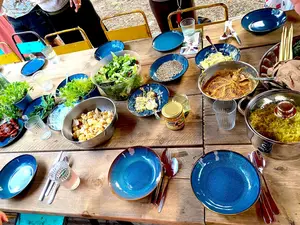


Since 2022, the Weltacker Youth Council has been working with us—an exciting project that brings young people in Berlin together. They all share one goal: a voice in Berlin’s food policy!